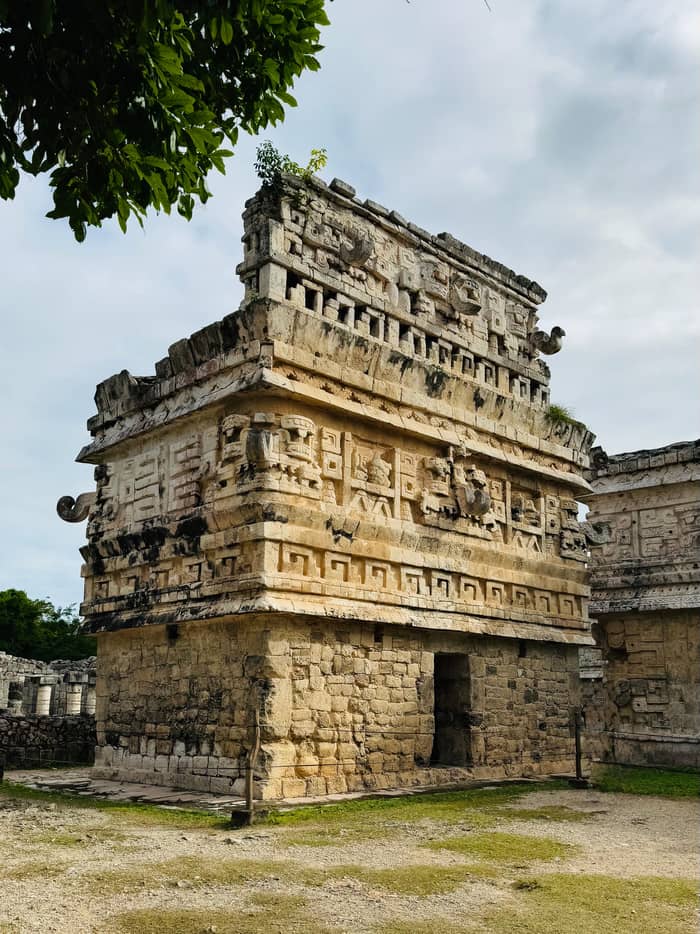
For the view
The convent atrium
A huge open courtyard
See a tour with IzamalSee 23 route stops
First pick a route, then tap any pin or stop for details and Google Maps.
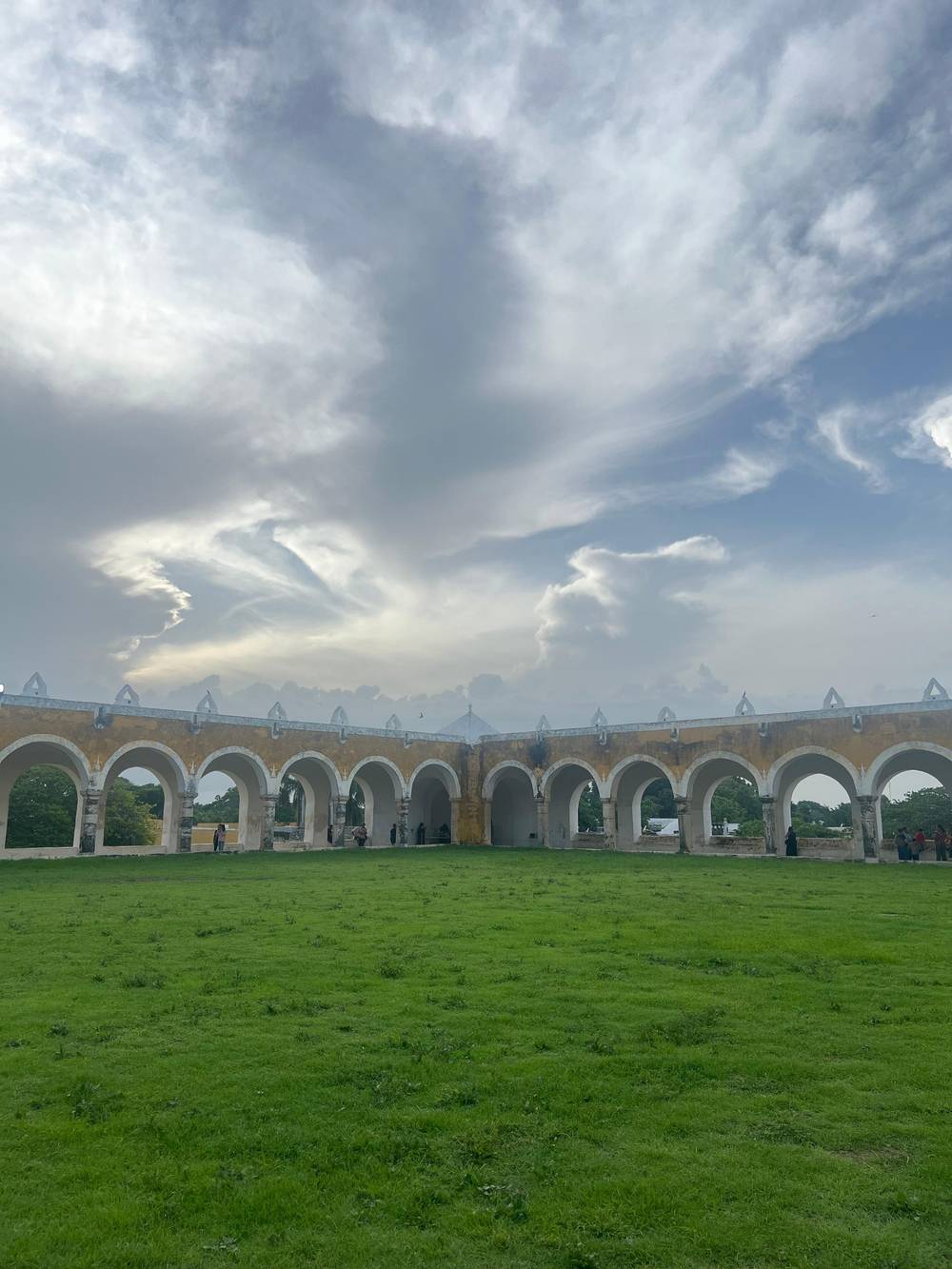
The convent atrium has 75 arches spread over 7,806.43 square meters, and the church above it is reached by 3 ramps.
Google MapsKinich Kakmo is the biggest pyramid on the peninsula by surface area, and INAH says the top gives a spectacular view.
Google MapsHabuk has a platform 90 m on a side and 3.80 m high, and it keeps the same free daily hours.
Google MapsTuul, also called El Conejo, measures 30 m east to west by 39 m north to south.
Google MapsChaltun Ha is a housing group with 3 construction phases, and it opened to visitors in the bulletin of December 2023.
Google MapsThe federal tourism article lists eating in the municipal market as an attraction of Izamal.
Google Maps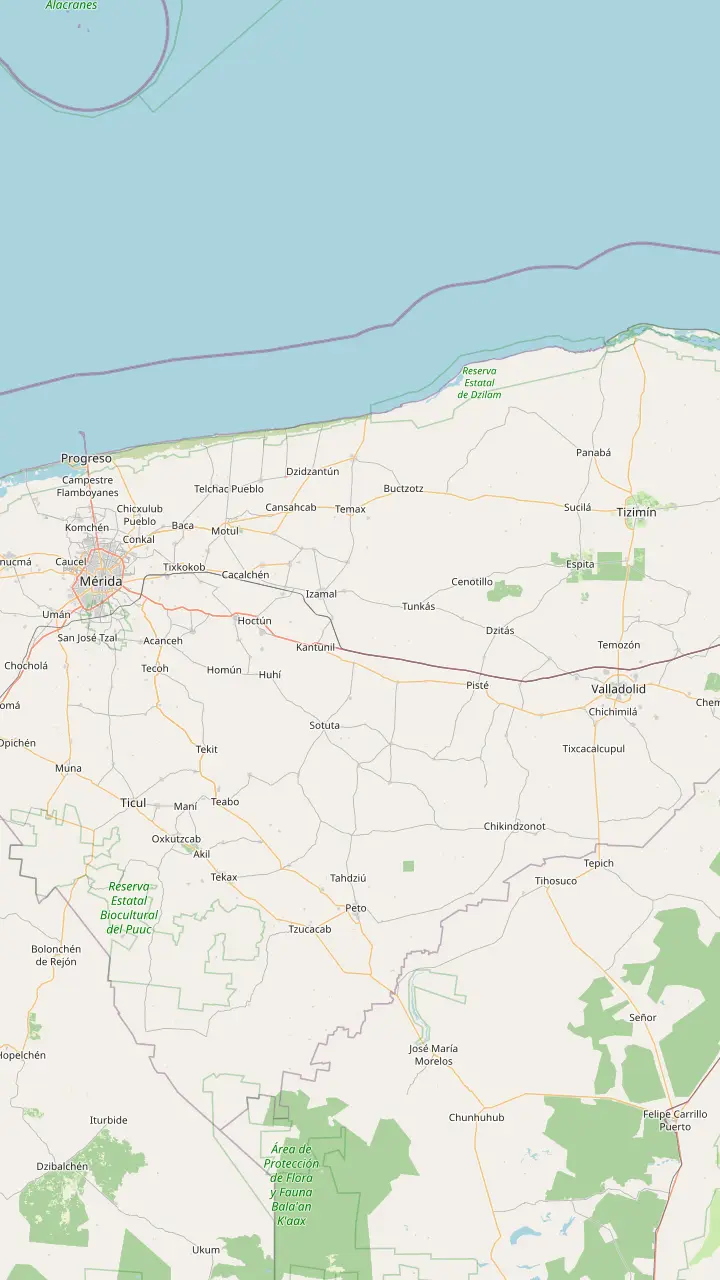
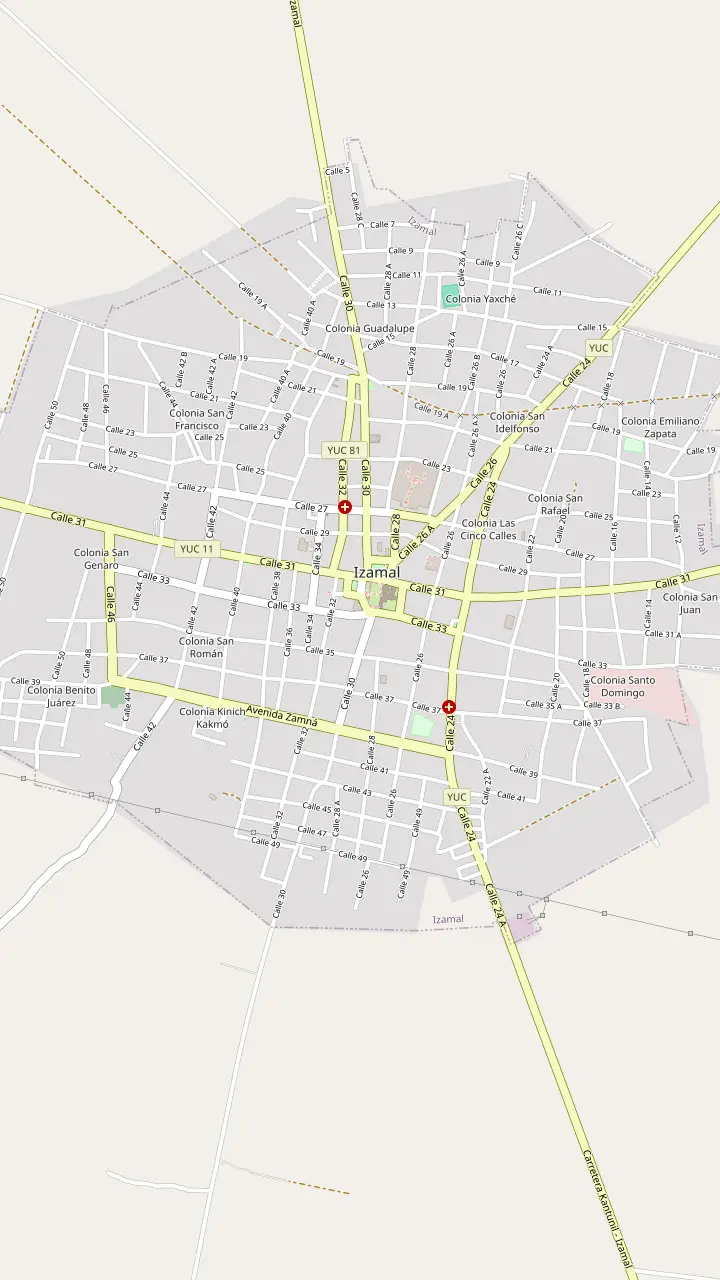
Merida is where the home tour begins and ends, and INAH puts Izamal 72 km away.
Google MapsYokdzonot Cenote is a stop of 2 hours on a small-group day from Merida that visits Chichen Itza first.
Google MapsPisté is the town beside Chichen Itza, and the weather station behind this site's climate record sits there.
Google MapsEl Castillo, the pyramid of Kukulkan, stands at the heart of the Chichen Itza archaeological zone.
Google MapsYucatan Travel names Ik Kil among the cenotes where sunlight filters in from above.
Google MapsValladolid lies 53 km from Chichen Itza, as Yucatan Travel gives it, and the home tour stops here for a cenote swim of 1 hour.
Google Maps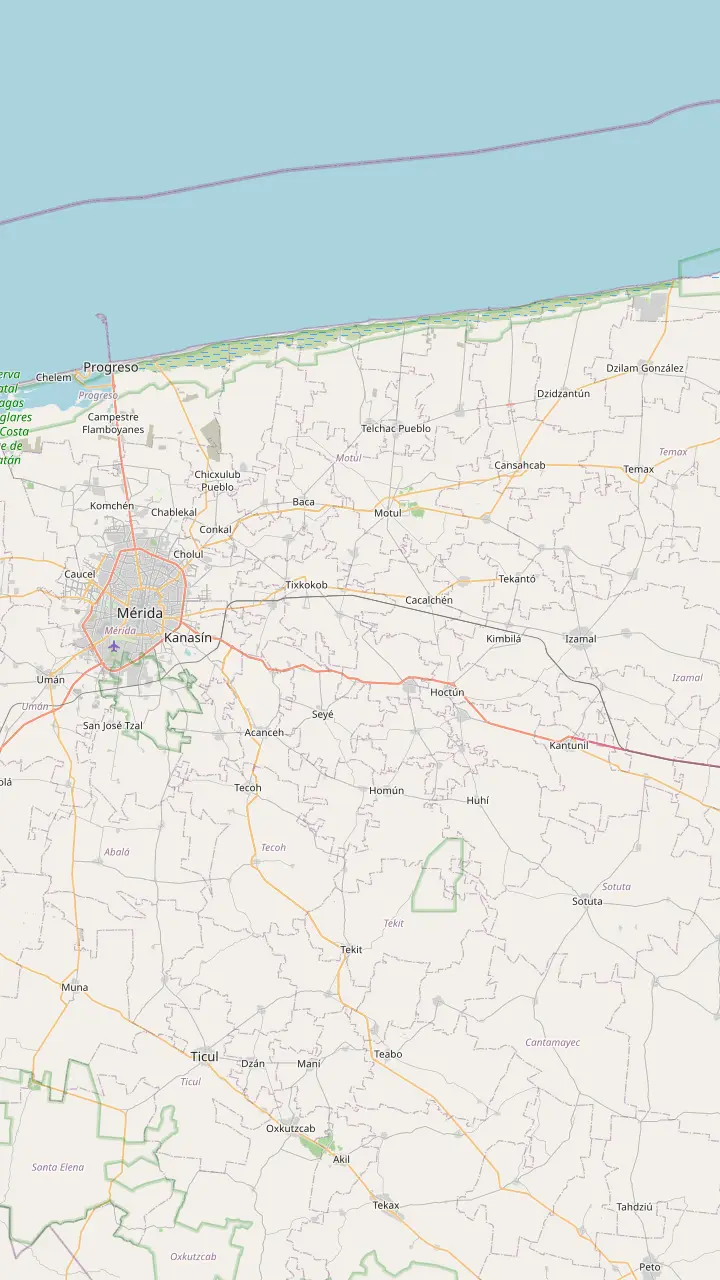
Merida is where the home tour begins and ends, and INAH puts Izamal 72 km away.
Google MapsINAH describes a narrow road from Tixkokob through Euan, Cacalchen and Citilcum as the other way to Izamal.
Google MapsINAH names Hoctun as the town where a bypass leaves Federal Highway 180 for Izamal.
Google MapsThe convent atrium has 75 arches spread over 7,806.43 square meters, and the church above it is reached by 3 ramps.
Google Maps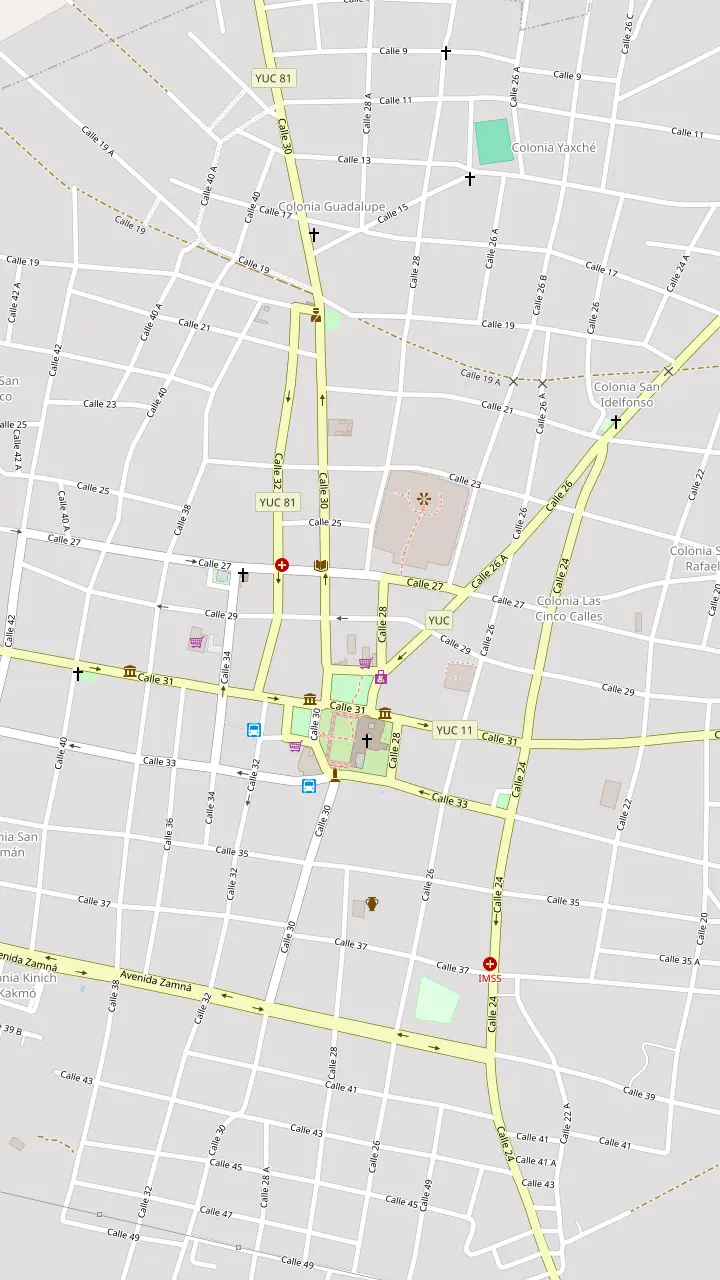
The convent atrium has 75 arches spread over 7,806.43 square meters, and the church above it is reached by 3 ramps.
Google MapsThe Constitution plaza is a short walk from the convent atrium, in the compact center that the walking visit covers.
Google MapsThe federal tourism article lists eating in the municipal market as an attraction of Izamal.
Google MapsKinich Kakmo is the biggest pyramid on the peninsula by surface area, and INAH says the top gives a spectacular view.
Google Maps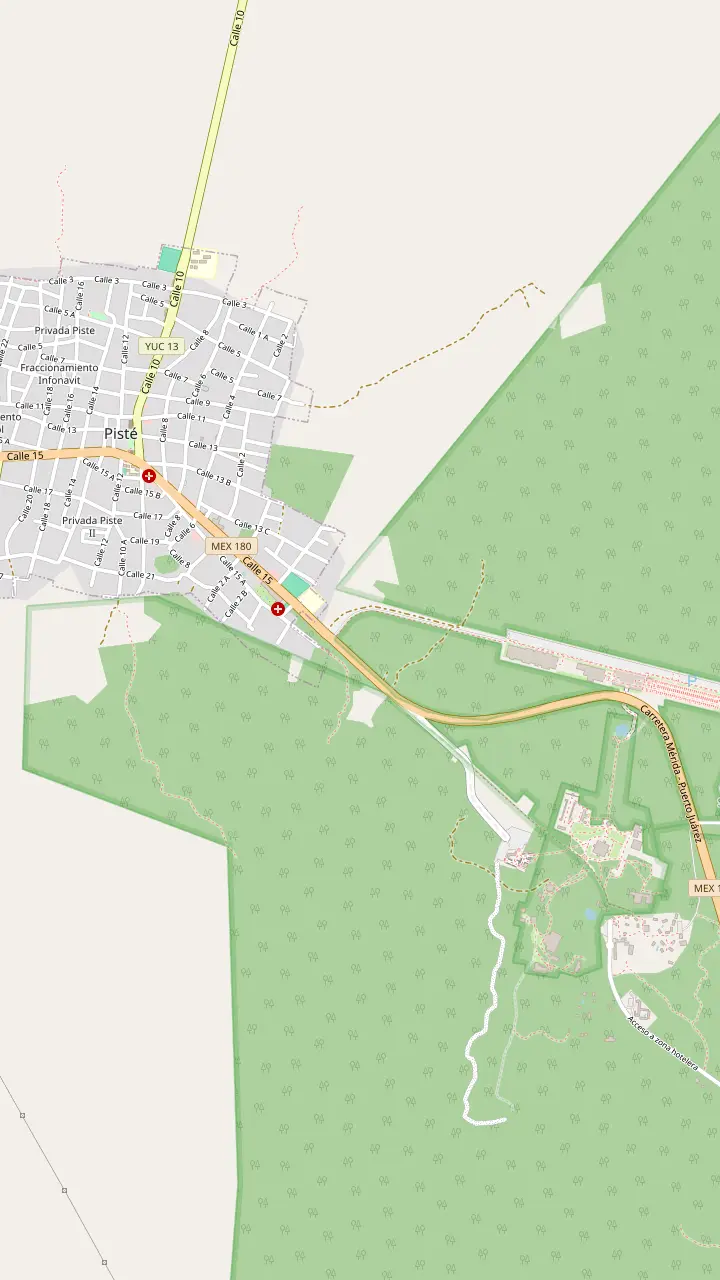
Pisté is the town beside Chichen Itza, and the weather station behind this site's climate record sits there.
Google MapsEl Castillo, the pyramid of Kukulkan, stands at the heart of the Chichen Itza archaeological zone.
Google MapsThe Great Ball Court lies inside the Chichen Itza archaeological zone, a short walk from the main pyramid.
Google Maps© OpenStreetMap contributors · map data
How the Franciscan convent rose on a Maya base, what the sun-macaw pyramid offers, which smaller mounds are open, and the hours and rules the official pages publish.
Editorial team, chichenitzaizamal.click · Updated November 23, 2026 · Reading: 7 min
Key facts
People searching for the Izamal pyramid usually mean Kinich Kakmo, the big mound on the north side of the main plaza, which INAH calls the most relevant building of the site and a monument dedicated to the solar deity.7 It does not stand alone. INAH counts a whole group of structures in the street grid, and the Franciscan convent of San Antonio de Padua sits on a pre-Hispanic base that the Maya raised long before the Spanish arrived.5
That mix is why the monuments are best read as a pair. The convent shows what the conquerors built on top of the old city, and the pyramids show what they left standing or reused. INAH says the Spanish dismantled the main structures and used the building materials for the new town, which is why many of the old mounds are hidden among houses and walls.8
Everything is within walking distance. INAH places the pyramid between streets 27 and 29, and the convent atrium faces the plaza that the town grew around.9 This page takes the monuments in turn, gives the hours and rules the official pages publish, and ends with a table, a map and a short list of ways to fit them into a day.
At a glance
| Monument | What the source gives | Hours and fee | Effort |
|---|---|---|---|
| Convent atrium | 75 arches, 7,806.43 m22 | The church sets its own hours | Climb 3 ramps14 |
| Kinich Kakmo | Third largest in Mexico3 | 08:00 to 17:00, free4 | A stair climb with a view16 |
| Itzamatul | 22 m high17 | 08:00 to 17:00, free18 | A short walk in town |
| Tu'ul (El Conejo) | 30 m by 39 m19 | 08:00 to 17:00, free18 | A short walk in town |
| Habuk | Platform 90 m wide20 | 08:00 to 17:00, free18 | A short walk in town |
Hours and free admission as INAH publishes them; the sources give no hours for the church, so check locally.4
The convento de San Antonio de Padua in Izamal was ordered by the chapter of 1549, according to the federal catalogue of monuments, but building began only in 1553. A first stage was finished in 1561, and the portals around the atrium were completed in 1618.10 The Yucatan state government dates the foundation to 1549 and credits Fray Diego de Landa and the Franciscan missionaries.1 The dates show a building campaign that stretched across decades.
The catalogue also names what stands on the site. The complex is made up of the church, the camarin, a convent with 2 cloisters, the chapel, the sacristan's house, the atrium bounded by arches and the orchard, and it was built over a pre-Columbian building known as Papolchac.13,11 INAH gives the older base another spelling, Ppap Hol Chak, so expect to meet both forms in guidebooks and signs.5
The state tourism site says the convent stands on the plateau of the main hill of the city and is climbed by 3 ramps built on its free sides.14 That climb is the best part of arriving: you walk up from the plaza, pass under the portal and step into an enormous open space. The catalogue says the complex is the most beautiful and representative example of colonial religious architecture on the peninsula, an opinion worth knowing before you form your own.15
Minutes on site
Minutes are those that the itinerary of a private 7-hour listing gives for each stop.
The atrium is the headline. The Yucatan state government says it is rectangular, has 75 arches and covers 7,806.43 square meters, just over half of the whole plot.2 The same source calls it the largest closed atrium in America and the second largest closed atrium in the world after St. Peter's Square in the Vatican, a ranking that is the government's own and that you can enjoy without measuring it.22
The church holds a baroque altarpiece covered with gold plating, and the state tourism site lists niches with figures of Saint Lucia, Saint Anthony, Saint Francis and Saint Joseph.23 The sculpture of the Virgin of the Immaculate Conception was brought by Fray Diego de Landa from Guatemala, according to the same page.24 The Virgin is why Yucatan Travel calls the town the most important Marian center for Yucatecan Catholics.25
The atrium has also been a stage. The federal catalogue records that in 1993 Pope John Paul II celebrated a mass there for the indigenous communities of America, and the Vatican publishes his address to those communities at the Sanctuary of Our Lady of Izamal, dated 11 August 1993.12,26 The state government adds a light and sound show, La luz de los mayas, projected on the arches of the atrium.27 Ask locally whether it is currently staged, since the source gives no dates.
Decide
Choose what you want from the stop and see where to begin.
If I only have 20 minutes
The convent atrium
The home tour allows a 20-minute stop, enough for the arches and the plaza.
If I want a view over the town
Kinich Kakmo
INAH says the top of the pyramid has a spectacular view.16
If I want quiet and fewer people
Itzamatul or Habuc
The smaller mounds share the same hours and free access.18
If I want the history in context
The convent
The catalogue traces it from 1549 to the portals of 1618.10
If I want a guide for the whole town
A private Izamal day
That listing gives the pyramid an hour and the convent half that.
Monuments compared
For the view
A huge open courtyard
See a tour with Izamal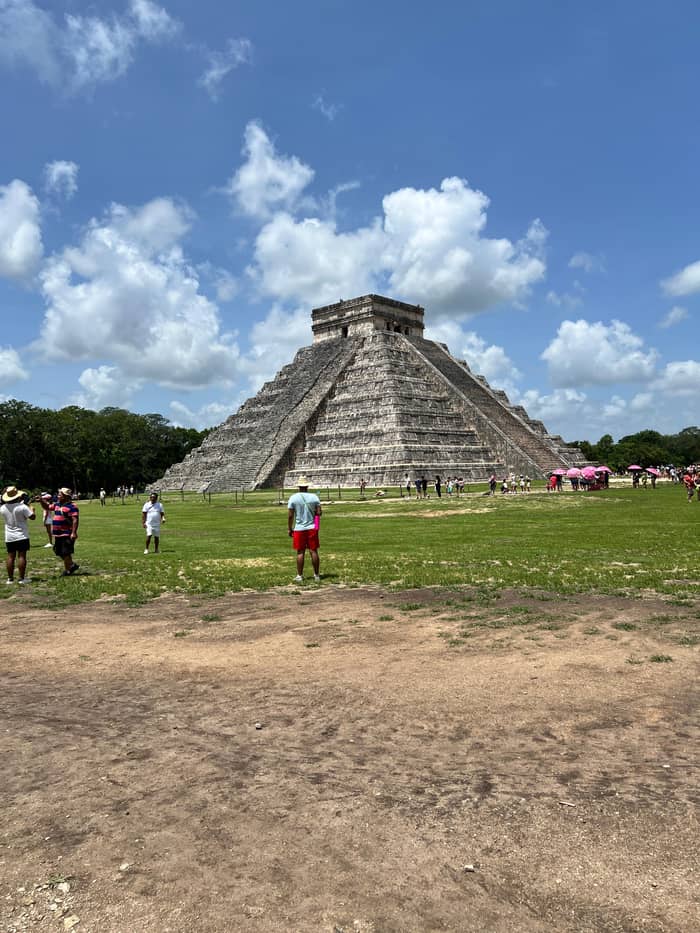
For the climb
The sun macaw
See a tour with Izamal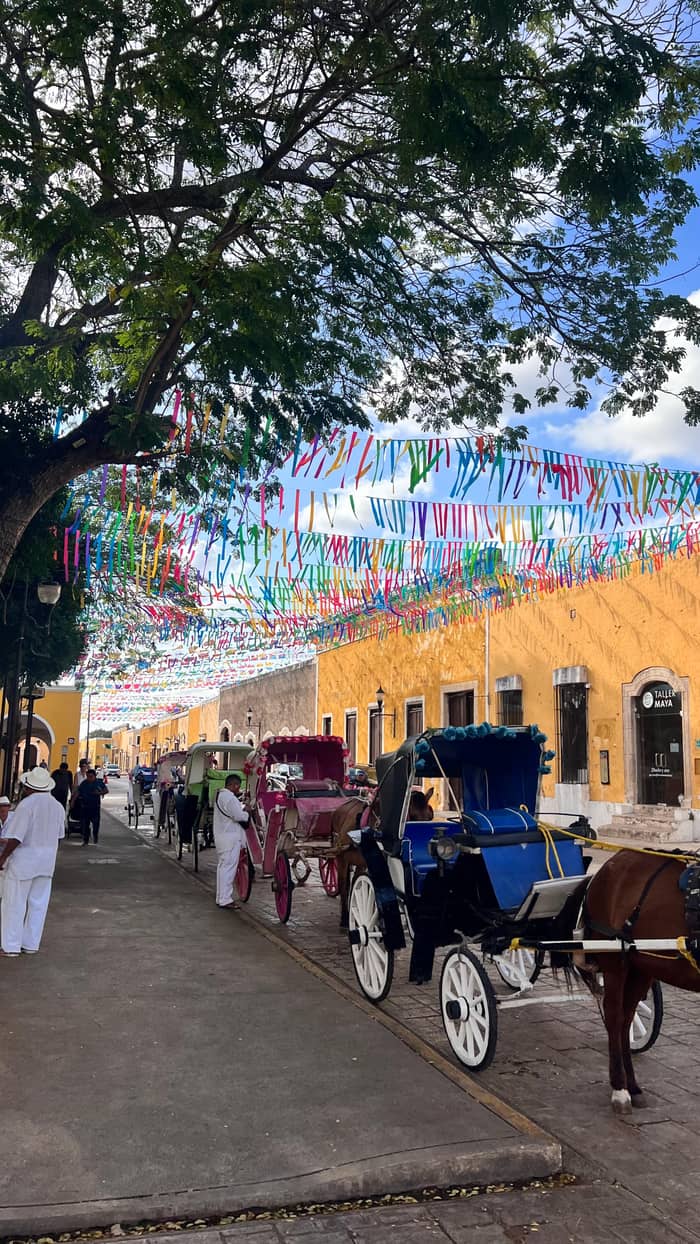
For quiet
The quieter mound
See a tour with IzamalThe Kinich Kakmo pyramid in Izamal takes its name from a phrase that Yucatan Travel translates as Fire Macaw with Solar Face.35 The site gives an interpretation: the Maya pictured the god Kinich descending in the heat of midday as a macaw, to burn and so purify the offerings brought to the pantheon.21 It is a name that suits a pyramid built to face the sun.
Size is where the pyramid earns its reputation. The same site calls it the biggest on the peninsula by surface area and third in Mexico, behind the Pyramid of the Sun at Teotihuacan and the pyramid at Cholula.3 The sources used here give no height for it, so this page states none: whatever the number, the effect is of a hill of stone rising right out of the town grid.
The reward for the climb is the outlook. INAH describes the outlook from the summit as spectacular, and the town spreads out below with the yellow convent in the middle.16 Go early if you want the stones and the stairs to yourself, bring water, and wear shoes with grip, because the steps are old. The monument is part of the archaeological zone, which is free to enter during the opening hours.4
Compare the prices
Enter your party and compare the tours that visit Izamal.
Look at 4 options
Enter your party and compare the tours that visit Izamal.
≈
View≈
View≈
View≈
ViewStarting prices as on the booking platform, converted at the ECB reference rate. You see the exact price at booking.
Building the convent
1549
The convent was ordered by the chapter of 1549 on a pre-Columbian base called Papolchac.10,11
1553
The catalogue says construction began in 1553.10
1561
The first stage was finished in 1561 under Fray Francisco de la Torre.10
1618
The portals around the atrium were completed in 1618.10
1993
Pope John Paul II celebrated a mass in the atrium for the indigenous communities of America.12
An INAH bulletin of December 2023 says that 4 more pre-Hispanic complexes, Itzamatul, Habuc, Tu'ul and Chaltun Ha, opened to visitors to complement the visit to the pyramid Kinich Kak Moo and the former convent, with the same hours and free access.34,18 These are quieter places, mostly low platforms among houses, and they suit an unhurried stroll better than a rushed photo stop.
The Yucatan state government gives some measurements. Itzamatul is the biggest structure after Kinich Kakmo, measures 22 m in height and was built between the years 300 and 600.17 Tu'ul, also called El Conejo, measures 30 m east to west by 39 m north to south and was explored in 1994.19 Habuk has a platform 90 m on a side and 3.80 m high, which makes it long and low rather than tall.20
Chaltun Ha is described by INAH as a housing group with 3 construction phases, and the English page says its Mayan name means water slabs.33 Together these mounds show that Izamal was a city and not a single temple. INAH says the civic and ceremonial core is among the most voluminous of the Maya lowlands, with buildings that together exceed a million cubic meters.36
Video
Pyramid Review on YouTube · Until you tap play, no video is loaded.
It is interpreted that the Mayas believed that the god Kinich came down in the blaze of the midday sun, to burn and therefore purify the sacrifices or offerings taken to the Mayan pantheon, using the form of a macaw.
Before you climb
INAH lists the Izamal zone as open Monday to Sunday from 08:00 to 17:00, with free admission.4 The English INAH page adds that the last entry is at 16:00, so plan to arrive well before the last hour if you want to climb and walk the smaller mounds.37 The bulletin on the 4 newer complexes gives the same daily hours and free access.34,18
Visits outside the normal operating hours carry a listed fee of MXN 730 on the English INAH page, which is a reason to choose the daytime visit.38 The rules on the same page are short: no smoking, no entry with food and no pets.6 The page gives no hours for the church itself, which is a parish building, so check the door or ask locally before planning a visit around a service.
How you reach the monuments is equally simple. INAH describes a drive of 72 km from Merida on Federal Highway 180 towards Cancun, with a turn at Hoctun, and says the pyramid is surrounded by the urban grid between streets 27 and 29.28,9 Park near the plaza and walk: the monuments are short distances apart, and the streets are the point of the visit.
A group day to Chichen Itza leaves little time here. On the home day tour the town gets a 20-minute window after a drive of 95 minutes, enough for the atrium and a photo from the plaza, not for the pyramid. If you want to climb, choose a tour built around the town. A small-group day gives Izamal 2 hours and names a climb up a Mayan pyramid among its highlights.
A private day from Merida, from $271, spends 30 minutes at the cultural center, 1 hour on the pyramid, 30 minutes in the convent and 1 hour at a workshop. That shape suits a first visit, because the pyramid gets real time and the convent a thoughtful short visit, with a long lunch between them.
Do it on your own and the plan is simple. Drive or ride from Merida, park at the plaza, climb the convent ramps, walk to the pyramid and give what is left of the day to the smaller mounds. The monuments close at 17:00, and the lights and sounds of the town change after that, which is a second reason to stay overnight if you can.4
FAQ
The chapter of 1549 ordered it, work began in 1553 and a first stage ended in 1561.10
The Yucatan state government gives those figures for the rectangular atrium.2
An INAH bulletin says those 4 complexes opened to visitors alongside the main pyramid.34
The federal catalogue records a mass for the indigenous communities of America in the atrium in 1993.12
INAH lists those 3 rules on its English page for Izamal, so nothing edible goes past the gate.6
Sources
Related guides
Planning the pyramid, the cenote and Izamal in one day? Ask a real person here.